Seaweed (Carrageenan) Quality & Buyer Specification Guide
What "Cottonii" and "Spinosum" mean, what Zanzibar's own draft quality standard actually specifies for moisture, cleanliness and grading, how dried seaweed is packaged and shipped, and what buyers should know before placing a purchase order. Grading conventions here are industry- and Zanzibar-standard based -- see our Zanzibar seaweed overview for origin, production and market context.

What's farmed, and by whom
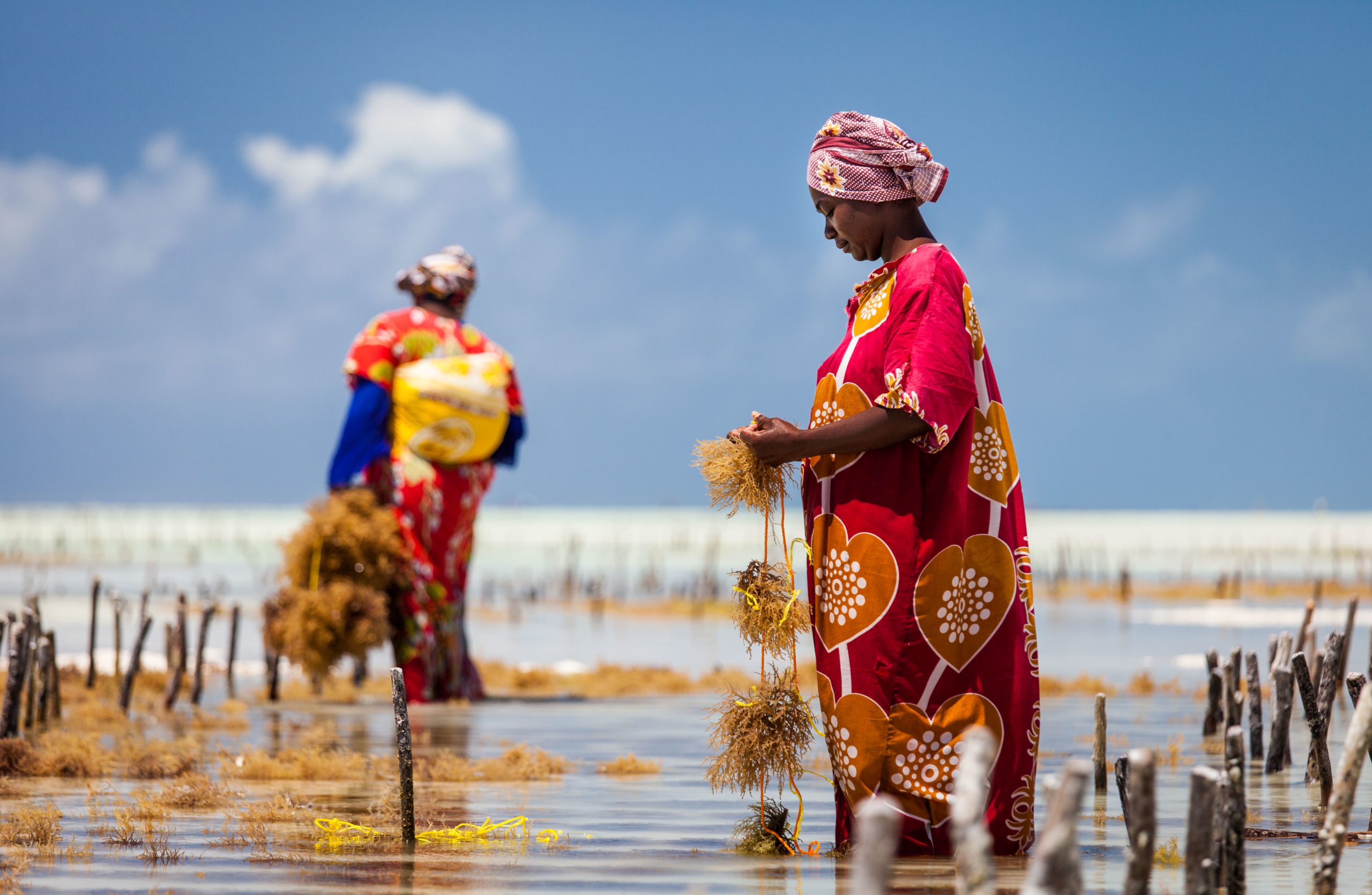
Zanzibar's seaweed farming is almost entirely two species of red algae (class Rhodophyceae), grown for carrageenan extraction rather than direct food use: Eucheuma denticulatum, traded as "Spinosum," and Kappaphycus alvarezii, traded as "Cottonii." Both are farmed using off-bottom (peg-and-line) systems -- seedlings tied to ropes strung between wooden stakes driven into shallow intertidal flats -- predominantly by smallholder farmers. Multiple sources converge on this being a strongly female-led sector: estimates range from roughly 23,000 to over 25,000 farmers, with 80-90% reported as women across different studies, and FAO material citing figures as high as 90%.
Zanzibar is reported as the third-largest producer of red Eucheumoid seaweed in the world, after the Philippines (and, implicitly, Indonesia as the largest), and seaweed is described as the archipelago's third-largest source of foreign-exchange earnings after tourism and cloves (FAO, 2016) -- one more-recent source puts seaweed at nearly 90% of Zanzibar's marine exports specifically, a narrower measure than total foreign earnings and not necessarily the same statistic.
Sources: WIEGO, "A Study of Working Conditions in the Zanzibar Seaweed Farming Industry" (Msuya, 2012); REPOA, "Enhancing Competitiveness of Seaweed Industry in Zanzibar"; FAO, "Zanzibar mariculture leaps forward"; ScienceDirect, "Factors influencing women to adopt new technologies for seaweed farming in Zanzibar".
Harvest timing -- continuous, not seasonal
We are not showing a harvest-calendar widget on this page, deliberately. Unlike a tree or vine crop with one or two annual windows, seaweed farming cycles described in the literature run roughly 4 to 10 weeks from planting to harvest, with farmers continuously re-tying new cuttings from each harvest back onto the lines -- a rolling, near-continuous cycle rather than a single season. Cited figures vary by source and site: an FAO regional account describes 4-6 weeks; a comparative economic study of Tanzanian farming methods cites 4-12 weeks; one farmer-facing account describes roughly six weeks for a roughly ten-fold size increase; and Zanzibar's own draft national seaweed standard (below) sets a flat minimum 45-day culture period regardless of season. Cycle length also shortens in the windy monsoon season (roughly October-March), when some sources report farmers harvesting every ~3 weeks specifically to avoid losing plants to rough water, versus a more typical ~6-week cycle in calmer conditions.
Putting a peak/secondary month calendar on this page -- the same widget used for cashew and vanilla, both genuinely seasonal crops -- would imply a fixed annual window that the source material does not support. If your supply agreement depends on specific delivery timing, confirm the farming site's current cycle length and planting schedule directly with the supplier rather than assuming a calendar season.
Sources: FAO, "Seaweed Collection and Culture in Tanzania"; URI Coastal Resources Center, "A Comparative Economic Analysis of Two Seaweed Farming Methods in Tanzania"; Zanzibar Bureau of Standards, Draft Zanzibar Standard PCD 435:2022, "Dried raw seaweed -- Specification," clause 4.1(b).
Zanzibar's own draft quality standard
Zanzibar has a national specification in progress for exactly this product: PCD 435:2022, "Dried raw seaweed -- Specification" (first edition), issued by the Zanzibar Bureau of Standards (ZBS) and circulated for WTO TBT stakeholder comment. It is a draft, not yet a finalised mandatory standard at the time of writing -- we report its contents as the most specific, Zanzibar-sourced document we found, not as a confirmed-in-force regulation. It covers both Cottonii and Spinosum, drawn in part from the Philippine standard PNS/BAFPS 85:2012.
The general requirements (clause 4.1) specify the product must be a single species, matured to at least 45 days' culture period, "visibly free from diseases such as epiphytism and 'ice-ice,'" and that colour variation (red, purple, green or brown) is expected and acceptable rather than a defect. Beyond that, the draft sets three numeric grades:
| Characteristic | Grade A | Grade B | Grade C |
|---|---|---|---|
| Clean anhydrous seaweed (CAS), % min | 90 | 80 | 70 |
| Sand, % max | 1 (all grades) | ||
| Impurities/debris, % max | 3 (all grades) | ||
| Moisture, % max -- Cottonii | 35 (all grades) | ||
| Moisture, % max -- Spinosum | 30 (all grades) | ||
| Salt (as KCl), % max -- Cottonii | 25 (all grades) | ||
| Salt (as KCl), % max -- Spinosum | 20 (all grades) | ||
"Clean anhydrous seaweed" (CAS) is the draft standard's own term for seaweed with moisture, salt, sand and impurities all removed -- the grade tiers (A/B/C) are set by how much of the dried weight is actually CAS, not by moisture alone. "Impurities/debris" is explicitly defined as other seaweed species, plastic, wood, shells, dirt and similar foreign matter -- a separate category from sand and salt, which get their own limits. The draft also sets heavy-metal ceilings (Annex, Table 2): arsenic 3mg/kg, lead 5mg/kg, mercury 1mg/kg, cadmium 1mg/kg, tested by named AOAC methods, plus a requirement to comply with Codex's general pesticide-residue limits.
Disagreement flagged: a UNIDO seaweed value-chain assessment describes real-world export purchase orders for Spinosum priced against a flat "35% average moisture content, maximum 2% contaminants" basis -- 5 points higher than the ZBS draft's own 30% Spinosum ceiling. We can't reconcile these from the sources available: it may reflect the draft standard not yet being in force, a different moisture test method, or simply commercial practice diverging from the pending national standard. Quote your counterpart's actual basis rather than assuming either figure by default. Sources: Zanzibar Bureau of Standards, Draft Standard PCD 435:2022, "Dried raw seaweed -- Specification" (WTO TBT notification, 2023); UNIDO, "Seaweed Value Chain Assessment of Zanzibar: Creating value for the poor."
Drying method and why moisture matters
Sun-drying on raised racks, mats or directly on coconut-palm leaves is the standard method reported for Zanzibar, typically around 3 days, extending to 3-4 days in the rainy season. The ZBS draft's own oven-drying reference method (Annex D) distinguishes the two species: Eucheuma (Spinosum) is dried at 60-65°C and Kappaphycus (Cottonii) at a higher 80-85°C, each to constant mass over 12-16 hours -- consistent with the two species carrying different moisture ceilings in the grading table above.
Moisture control matters beyond simple shipping weight: seaweed-industry sources describe Eucheumoids as unstable in storage above roughly 35% moisture, with carrageenan quality in the raw material reportedly degrading further above ~40% moisture -- high enough that transported seaweed can arrive with functional carrageenan properties too weak for some processing applications. This is reported as general industry/trade knowledge rather than a single named study, and we flag it as such rather than attributing it to the ZBS standard, which does not state a mechanism, only a limit.
Sources: UNIDO, "Seaweed Value Chain Assessment of Zanzibar"; Zanzibar Bureau of Standards, Draft Standard PCD 435:2022, Annex D.
Packaging
Reported packaging practice varies by source, and we report the range rather than one figure: cultivated, buyer-graded seaweed has been described going into 60kg polypropylene bags for truck transport to Zanzibar Town; a separate account describes wrapped 100kg bales, with roughly 20 tonnes loading into a 20-foot container; and lower-quality wild-collected material (a smaller, declining part of the trade) has been described in 40kg hessian sacks. The ZBS draft standard itself does not mandate a specific bag/bale weight -- it requires only "food grade material that secures the integrity and safety of the product" (clause 10.1), plus a defined label content (product name, species, brand, producer/packer address, storage/transport conditions, packing date, best-before date, lot/batch code, country of origin, net weight, and disposal instructions for the packaging itself), in Kiswahili and/or English.
Sources: UNIDO, "Seaweed Value Chain Assessment of Zanzibar"; Zanzibar Bureau of Standards, Draft Standard PCD 435:2022, clauses 9-10.
Carrageenan -- the downstream value driver
Buyers purchase dried raw seaweed as feedstock for carrageenan, the hydrocolloid actually used in food, cosmetics and other applications -- the quality parameters above (cleanliness, moisture, species purity) exist because they predict carrageenan yield and functional quality, not because dried seaweed itself is the end product. One industry figure cited: roughly 4-5 tonnes of raw dried seaweed to produce one tonne of extracted carrageenan, with carrageenan (iota type cited specifically) priced around US$15/kg -- a large step up from raw seaweed, illustrating why processing capacity (rather than raw-material volume alone) is the real value-capture question for Zanzibar's industry. The Tanzanian government has reportedly been supporting development of indigenous carrageenan-processing capacity to capture more of that value locally, rather than exporting raw dried seaweed exclusively.
Source: UNIDO, "Seaweed Value Chain Assessment of Zanzibar: Creating value for the poor" -- figures reported as industry-typical, not independently audited.
Tanzania/Zanzibar-specific: buyers, routing and pricing
Dried seaweed is typically consolidated through Zanzibar Town and shipped onward via Dar es Salaam to international carrageenan processors, though direct shipment from Zanzibar's own port is also reported. Named long-standing buyers/processors include C-Weed Corporation (operating a baling warehouse at Mkoani, Pemba, trading in Zanzibar seaweed for 30+ years) supplying processors including Degussa (France), FMC (USA), CP Kelco (Denmark) and CEAMSA (Chile/Spain) at various points since the mid-2000s.
Pricing figures diverge across sources and we report them as found rather than reconcile them: one account gives farmgate prices of roughly US$0.18-0.25/kg dry weight in recent years, with exporters selling baled dried seaweed at roughly US$350-450/tonne FOB; a separate, more recent figure describes Spinosum prices rising 43% "from 700 to 1,000 per kg" and Cottonii rising 17% "from 1,800 to 2,100 per kg" -- the currency for this second figure is not stated in our source and is very unlikely to be USD per kg at that level (it would be far above the other cited range); we suspect Tanzanian shillings but could not confirm, so we are flagging this rather than converting or presenting it as comparable to the USD figures above.
Sources: UNIDO, "Seaweed Value Chain Assessment of Zanzibar"; AgriFocus Africa, "Zanzibar Secures Market for Neglect Seaweed".
Known challenges -- honest context, not invented optimism
Ice-ice disease -- a stress response to elevated water temperature, salinity swings and light intensity that whitens, softens and ultimately breaks apart the seaweed before it matures -- is reported as a serious, worsening problem in parts of Zanzibar, with one account citing 40-60% of annual farmer income lost in affected areas and farmer numbers in at least one village (Bweleo) falling from roughly 200 to 60. Cottonii, the higher-value species, is reported as now unfarmable in some previously productive sites because of disease and die-off. This is cited as realistic buyer-relevant context (supply reliability, not just unit pricing) rather than as a reason to avoid the sector -- the same sources also document active government and NGO response (cluster initiatives, new technology adoption, local processing investment).
Sources: Daily News, "Rising seas, failing harvests: Zanzibar seaweed farmers battle a changing ocean"; The Citizen, "Seaweed Farming: Prosperity or peril in the face of climate change?".
Export documentation & HS code
Dried seaweed intended for human consumption is classified under HS 1212.21; dried seaweed not fit for human consumption (the carrageenan-extraction material this guide mainly covers) under HS 1212.29, both within the broader HS 1212 "seaweeds and other algae" heading. One trade-data source puts total Tanzania seaweed exports at 11,586 tonnes in 2019 -- a single-year figure from secondary trade-data aggregation, not independently cross-checked here against Tanzanian government export statistics, so treat it as indicative rather than current.
Sources: Seair/Zauba HS code references for dried seaweed; Volza, "Seaweeds Exports from Tanzania".
Buyer specification checklist
Worth putting in an RFQ or purchase order, whether or not every field applies to your order:
- Species -- Cottonii (Kappaphycus alvarezii) or Spinosum (Eucheuma denticulatum); the two have different moisture and salt ceilings under the ZBS draft standard, don't assume one spec covers both.
- Grade -- if quoting against the ZBS draft, specify Grade A/B/C (CAS % basis) rather than a bare "export grade."
- Moisture basis -- confirm whether the quote is against the ZBS draft ceilings (Cottonii 35% / Spinosum 30%) or a buyer's own purchase-order basis (e.g. the 35%-flat Spinosum figure some exporters reportedly use) -- these differ, see above.
- Sand, impurities and salt (as KCl) limits -- and which test method (see ZBS draft Annexes A-D for the reference methods).
- Heavy-metal and pesticide-residue compliance -- request a certificate of analysis if these matter to your end use.
- Disease-free attestation -- visibly free from ice-ice and epiphytism per the ZBS draft's general requirement.
- Packaging -- bag/bale weight and material, and labelling language (Kiswahili and/or English per the ZBS draft).
- Destination & Incoterm -- see our Incoterms for Commodity Buyers guide.
Sample & inspection guidance
- Appearance -- colour variation (red/purple/green/brown) is normal per the ZBS draft, not a defect by itself; look instead for the whitened, hardened texture characteristic of ice-ice damage.
- Cleanliness -- visible sand, salt crust or foreign debris (other seaweed, plastic, wood, shell fragments) should be minimal; the ZBS draft's own test methods (Annexes B and C) use overnight soak-and-weigh and hand-sorting respectively, not a visual estimate, for a binding figure.
- Dryness -- seaweed should feel genuinely dry and somewhat brittle, not pliable or damp; moisture percentage still requires the oven-drying or meter method in Annex D to confirm, not touch alone.
- Odour -- should smell of dried marine algae, not sour, fermented or ammonia-like, which can indicate incomplete drying or storage spoilage.
- Packaging condition -- intact bags/bales, no signs of moisture ingress or pest activity in transit.
A visual/manual sample check is a screening step, not a substitute for laboratory testing -- moisture, sand, salt and heavy-metal percentages all require the lab methods in the ZBS draft's annexes to confirm, not inspection by eye. Our general Quality Inspection & Pre-Shipment Verification guide covers the wider pre-shipment inspection process that applies across commodities, including seaweed.
Full Zanzibar seaweed profile
Origins, production, farming methods, and market/trade data with sources.
Read the full profile →Suppliers
C-Weed Corporation
Licensed Zanzibar seaweed exporter; historic buyer relationships with France (Degussa/Cargill) and the USA (FMC) since 2006,…
Zanzibar Seaweed Company (ZASCO)
Government institution (Ministry of Trade), formerly Zanzibar Seaweed Trade Cooperation (ZTSC, est. 2020); buys and processes…
MelaninGold Organic
Zanzibari value-added seaweed products (skincare, haircare, food supplements), 20+ SKUs. Founded 2020 by Kulthum Maabad; pivoted…

Zanque Aqua Farm
Licensed Zanzibar seaweed exporter; historic buyer relationship with the USA (FMC) since 2006.
Mwani Zanzibar Co. Ltd
Paje-based company training women to farm seaweed and process it into soaps, lotions and cosmetics.
S.M Rashid Investment Limited
Licensed Zanzibar seaweed exporter; historic buyer relationship with Vietnam since 2009.
Last reviewed 8 October 2026. Sources cited inline above; see also Data Sources and Methodology for how we handle disagreeing figures and unverifiable claims.